Inclusive Screenings Bring Films to Life
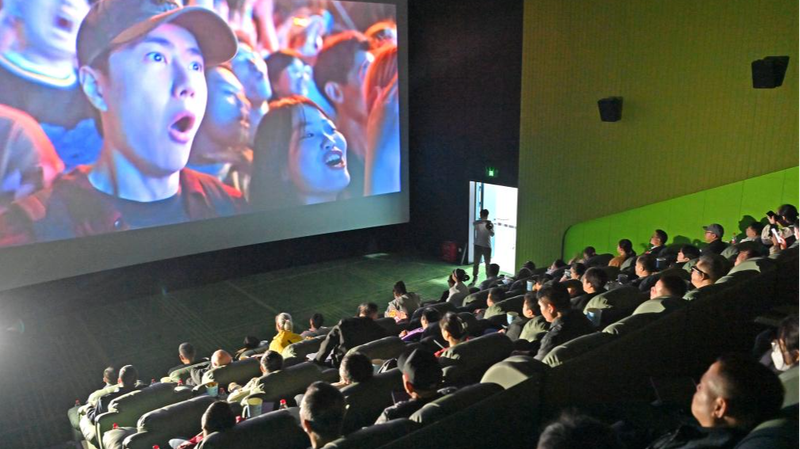
On Wednesday, December 3, at a community center in Xicheng District in Beijing, capital of the Chinese mainland, Xu Wei settled into a seat alongside 40 attendees to “watch” the street dance film One and Only.
Unlike a typical screening, detailed audio descriptions filled pauses between dialogue and sound cues—painting scenes, actions and even actors’ body language in vivid detail.
“I’ve come here four times to enjoy these films. It really means a lot,” Xu said. “The audio-described version allows not only people with vision loss, but also others with physical or cognitive challenges, to experience movies more fully.”
Behind the Scenes of Accessible Film
Founded in December 2017 by volunteers from the Communication University of China, Guangming Cinema has engaged over 800 faculty members and students in crafting accessible adaptations. To transform a single 90-minute film, the team watches it about ten times, drafts a 20,000–30,000 character narration and completes the process in 28 days with three student volunteers, two mentors and one visually impaired participant. So far, over 800 titles have been adapted.
Volunteer Hu Fang recalls a pivotal moment when a child in the audience asked, “What is the color red?” The question reshaped their approach—descriptions now not only match visuals but also convey how sound and emotion paint a world for those without sight.
Expanding Reach and Impact
This year’s screenings in Beijing were part of a nationwide push for the International Day of Persons with Disabilities on December 3. Guangming Cinema partnered with more than 100 community cultural centers and all 2,244 special education schools across the Chinese mainland—sending each a secure hard drive loaded with accessible films.
Surveys led by co-founder Fu Haizheng show willingness among visually impaired viewers to attend these screenings soared from 13 percent to 63 percent in just a few years. Cao Jun, deputy chair of the Beijing Association of the Blind, praised the “immersive, three-dimensional sound design” and the expanded range of genres from classics to animations and thrillers.
Looking ahead, Fu hopes to extend audio-described experiences to exhibitions, museums and other cultural events—ensuring equal access to the arts for all.
Reference(s):
A Chinese volunteer organization transforms film for visually impaired
cgtn.com